Linen Trousers: How to Check Fit, Opacity and Quality
Linen trousers can look wonderfully easy on a hanger, then reveal a pinching waistband or surprisingly visible pockets when you put them on. As May brings longer days and the first properly warm afternoons, a few careful checks will help you choose a pair you can wear comfortably beyond the changing room. Give yourself time to look, move and sit before deciding.
Compare Pure Linen with Linen Blends
Start with the fibre label, then use your hands. Pure linen often has a slightly irregular surface, with little thickened threads that are part of its character. It can feel crisp when new and soften with wear and washing. Those natural variations are different from loose threads, damaged areas or a weave that looks stretched apart along a seam.
A linen blend may feel quite different. Cotton can give it a more familiar, substantial handle, while viscose often adds fluidity. Added synthetic fibres can change the drape and creasing, but the percentage alone will not tell you whether the trousers feel comfortable. Rub a small section gently between your fingers and notice whether it feels pleasant against bare skin.
Match the cloth to your plans
For commuting and seated lunches, you might prefer a cloth with enough body to fall cleanly from the hip. For relaxed weekends, a softer, looser pair may suit you better. Hold two options beside each other and compare how they hang. A heavier fabric is not automatically better quality, and a lightweight one should still have an even, stable weave.
Check Opacity in Bright Light
Changing room lighting can be forgiving. If possible, move towards daylight or a brighter area while remaining within the shop’s fitting arrangements. At home, stand near a window with light reaching you from the front and side. Look at the seat, thighs and pocket bags, then turn around using a second mirror if you have one.
Wear underwear close to your skin tone for a useful everyday test. White underwear can show clearly beneath pale fabric, and prominent seams may remain visible even when the colour blends in. You are checking whether the trousers offer the coverage you want under normal clothes, rather than trying to make every pale fabric completely opaque in every light.
- Notice whether the pocket bags create large, distracting shapes.
- Bend a knee and check whether tension makes the weave look more open.
- Look for a lining that ends awkwardly across the thigh.
- Check whether a lining feels restrictive or warmer than you want.
If coverage only works with a very specific extra layer, consider whether you will want that layer on a warm day. A slightly deeper colour or denser cloth may be an easier choice.
Sit and Walk to Assess the Fit
A standing pose tells you relatively little about trousers you will wear on trains, at a desk or over lunch. Fasten them normally, without holding your stomach in, and sit down fully. The waistband should stay comfortable, and the front rise should give you room without pulling sharply into your body.
Walk several steps, climb a step if one is safely available, and bend as though picking up a bag. Watch for pockets springing open, horizontal pulling across the hips or seams twisting towards the front of your legs. These clues may point to a cut that does not suit you, even when the waist measurement seems right.
Test the waistband and hem
With an elasticated waist, check that the elastic stretches easily and returns evenly. A drawstring can adjust the waist, but it cannot create missing room through the seat. Try a neighbouring size if needed and compare how both feel seated.
Wear shoes with a sole height similar to your everyday pair. The hem should clear the floor while you walk, including at the back. If it needs shortening, check whether a deep cuff, shaped hem or decorative detail would make that less straightforward.
Inspect Pockets, Seams and Fastenings
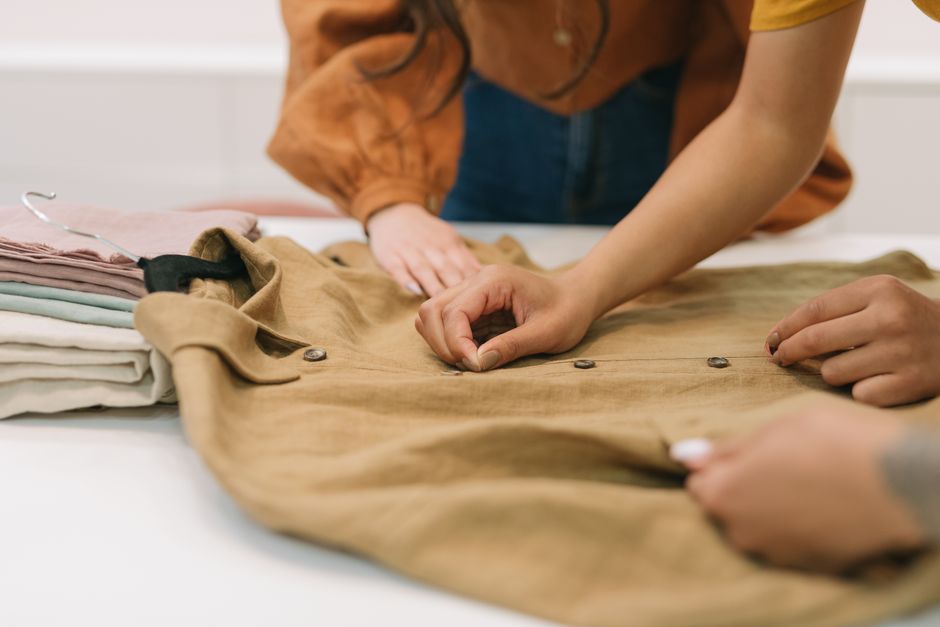
Turn the trousers partly inside out and follow the stitching. Seams should look secure and reasonably even, without skipped stitches or threads pulling free. Pay particular attention to the crotch, pocket corners and the bottom of the zip, where movement puts extra strain on the garment.
Some visible irregularity belongs to linen’s texture; puckered stitching and gaps beside a stressed seam deserve a closer look. Gently ease the fabric either side of a seam without tugging hard. You want it to remain stable during ordinary movement.
Try the pockets with your own hand. A pocket that is barely deep enough for your fingers may not be useful for the small things you carry. If you normally keep a phone in your trousers, test its weight where permitted: it may pull a lightweight pocket out of shape even when it fits.
- Run the zip up and down and check that the fabric stays clear.
- Make sure buttons are secure and pass comfortably through their holes.
- Look for firmly attached belt loops if you plan to use a belt.
- Check that pocket openings lie flat when your hands are out.
Allow for Creasing and Fabric Movement
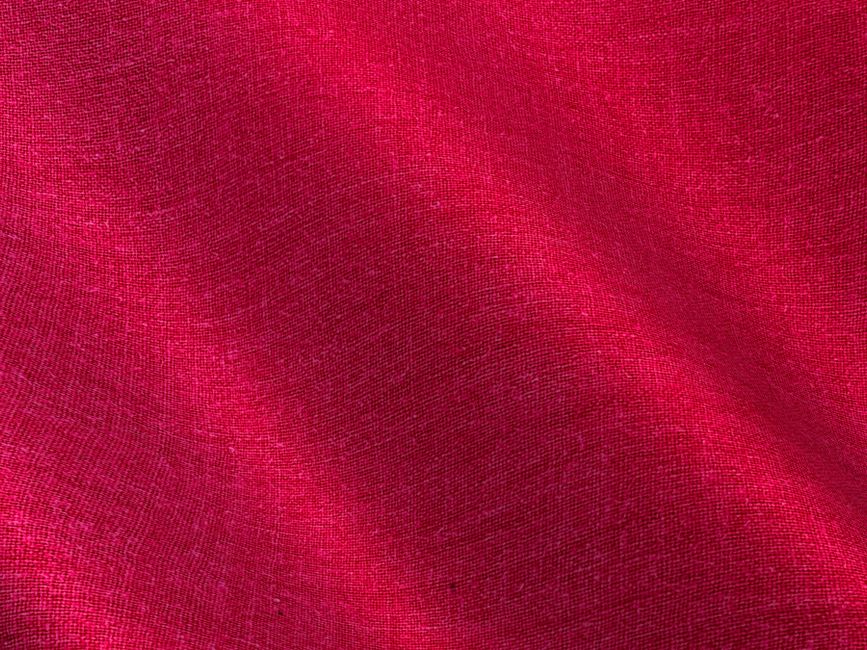
Linen creases when you sit, bend and live in it. Decide whether you enjoy that relaxed appearance before buying a pair that needs to look freshly pressed all day. Take a small section in your hand, release it and see how the resulting folds sit. Avoid crushing the garment; a gentle squeeze gives you enough information.
There is also a difference between soft creases and persistent pulling. Folds behind the knees after sitting are ordinary. Tight lines radiating from the crotch or pockets while you stand can indicate that you need more room or a different cut. Do not rely on the fabric stretching enough to solve an uncomfortable fit.
Some trousers relax through wear, especially around areas that bend, while washing may change their dimensions again. Read any garment-specific information about this. Buy for comfort now, with enough ease to move, rather than deliberately choosing a tight pair in the hope that it will eventually behave differently.
Read the Care Instructions Before Choosing
Before you take the trousers home, picture an ordinary laundry day. Can you use the recommended washing method, give them suitable drying space and manage any pressing they need? A pair that fits your routine is much more likely to become a favourite than one you keep postponing washing.
Follow the actual care label rather than assuming all linen can be treated alike. Dyes, linings, trims and blended fibres can affect the instructions. If alterations are planned, establish whether the trousers should be washed first according to their care guidance, so the finished length is based on the garment you will actually wear.
Finally, try imagining three outfits using clothes already in your wardrobe: perhaps a fine cardigan for a cool May morning, a cotton shirt for lunch and a simple vest for a warmer afternoon. If the trousers feel good seated, provide the coverage you want and work with those familiar pieces, you have a much stronger reason to buy them than a lovely hanger shape alone.