
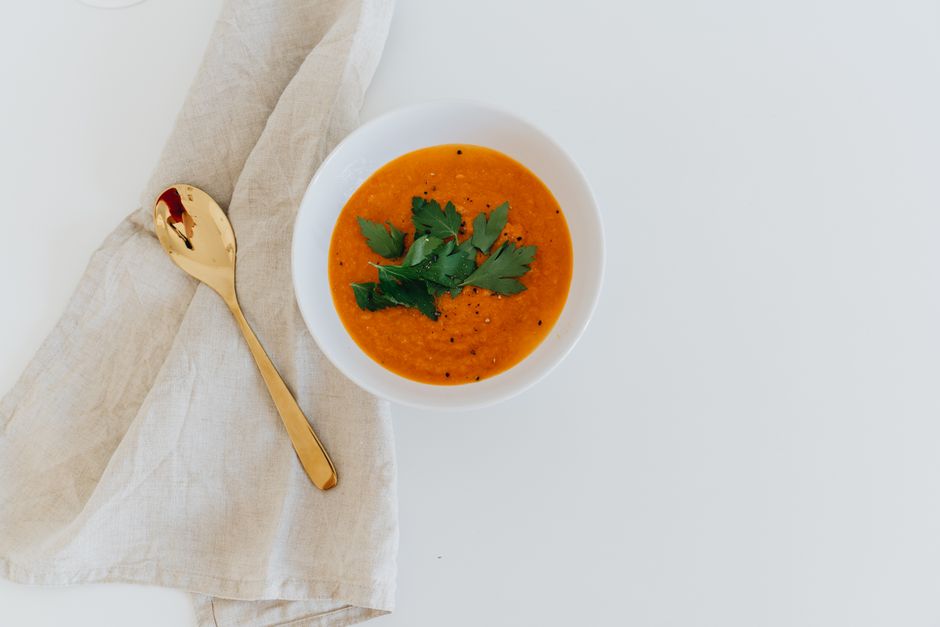
A Sunday Soup Session for Easier Cold-Weather Lunches
Lunch is easier to look forward to when there is a portion of homemade soup waiting in the fridge. A Sunday session can give you two different flavours without covering every kitchen surface in peelings and pans. For October, start with a warming carrot and lentil soup and a mellow roast squash version, then freeze some portions so your weekday lunches have a little variety.
Choose Two Soups with Shared Ingredients
Pick recipes that share the everyday preparation but taste different in the bowl. Onions, carrots, garlic, vegetable stock and olive oil can serve both soups. Red lentils make the carrot version thick and substantial, while roasting gives the squash a deeper flavour before blending. Cumin suits the lentils; thyme works nicely with squash.
The quantities below make roughly four lunch portions of each, depending on how much liquid you add and what you serve alongside. Before shopping, check that you have two suitable pans, a roasting tray, blending equipment if needed and enough containers. Eight portions are useful only if you have space to cool and store them.
- Two medium onions and four garlic cloves.
- About 600 grams of carrots, divided between the soups.
- One butternut squash yielding about 800 grams of prepared flesh.
- 200 grams of dried red split lentils.
- Roughly two litres of vegetable stock, plus water for adjusting.
- Olive oil, ground cumin, dried thyme and a lemon.
Check your stock before adding salt, as its seasoning will influence both batches. Keep toppings separate from the shopping essentials: toast, yoghurt, seeds or leftover cooked beans can be chosen later. You are preparing a flexible lunch base, so there is no need to buy six garnishes on Sunday.
Prepare Vegetables Before Starting the Hob
Clear a working space and set out a bowl for peelings. Wash the vegetables, peel and chop the onions, and prepare the garlic. Divide the carrots into 500 grams for the lentil soup and about 100 grams for the squash soup. Cut them into fairly small, similar pieces so they soften evenly.
For the squash, use a stable board and a sharp knife. Trim the ends to create a flat base, then peel, halve and scoop out the seeds. Cut the flesh into chunks about two to three centimetres across. Prepared squash pieces are a useful option if cutting a whole squash makes the session awkward or tiring.
Rinse the lentils in a sieve and check them for any small debris. Measure the spices and prepare the stock. Keep the ingredients for each soup in separate groups so you can see immediately which onion or portion of carrots belongs in which pan.
Heat the oven to 200°C, or 180°C fan. You can roast the squash while the lentil soup cooks, then finish the second soup once the first is ready. If you have only one large saucepan, cook sequentially and allow more time. A calm session is more useful than a fast one that leaves you with scorched onions.

Build a Filling Lentil and Carrot Soup
Warm one tablespoon of olive oil in a large saucepan over a medium heat. Add one chopped onion and cook for about eight minutes, stirring occasionally, until softened. Turn the heat down if the edges brown before the centre softens. Add two chopped garlic cloves and one teaspoon of ground cumin, stirring for about thirty seconds.
Add the 500 grams of chopped carrots, the rinsed lentils and one litre of vegetable stock. Stir well, bring to a boil, then reduce to a gentle simmer. Leave the lid slightly ajar and cook for about twenty-five to thirty minutes, checking the lentil packet for its cooking guidance. Stir occasionally so the thickening lentils do not catch on the base.
The soup is ready for finishing when the carrots yield easily to a fork and the lentils have softened and begun to break down. If it becomes too thick before that point, add a little hot water and continue cooking. Texture matters more than the minute hand on the clock.
Choose how smooth you want it
Leave it as it is for a textured bowl, mash some carrots against the pan or blend a portion for a creamier consistency. Take the pan off the heat before using a stick blender and keep its head submerged to reduce splashes. Add a squeeze of lemon, taste and adjust the seasoning. Expect the lentils to thicken further as the soup cools.
Blend a Roast Squash Soup to Your Taste
Toss the prepared squash with one tablespoon of olive oil and half a teaspoon of dried thyme. Spread it across a roasting tray in a single layer, using a second tray if the pieces are crowded. Roast for about thirty to forty minutes, turning once, until the centres are tender and some edges are golden.
Meanwhile, soften the second onion in another tablespoon of olive oil in a saucepan. Add the remaining two garlic cloves and the reserved carrots, stir briefly, then pour in 750 millilitres of vegetable stock. Simmer until the carrots are tender. Add the roasted squash and any soft browned pieces from the tray, leaving behind anything burnt.
Take the pan off the heat and blend carefully. Start with the liquid already in the pan, then add more stock a little at a time until the soup pours comfortably from a ladle. You may use another 250 millilitres or more, depending on the squash and your preferred thickness.
If using a jug blender, check that it is designed for hot liquids and follow its filling and venting instructions; otherwise let the soup cool before blending. Never seal hot soup in a personal blender cup. Taste the finished batch before adding salt, then brighten it with a little lemon juice if it seems overly sweet or flat.

Cool and Store Portions Safely
Have your containers ready before the pans are finished. Divide soup into smaller, shallow portions so it cools more quickly than it would in a large pot. You can stand suitable containers in a basin of cold water, keeping the water out of the soup, and stir with a clean spoon to release heat.
Cool promptly and refrigerate or freeze within one to two hours of cooking. Do not leave the pans on the hob for the rest of the afternoon. Keep your fridge at 5°C or below and leave enough room around the containers for cold air to circulate. Cover portions for storage and label them with their contents and cooking date.
- Keep only the portions you will eat within forty-eight hours in the fridge.
- Freeze the remainder promptly in suitable containers with expansion space.
- Defrost frozen portions in the fridge and use within twenty-four hours of full defrosting.
- Reheat only the amount you need, and reheat each portion only once.
For lunches away from home, keep chilled soup cold during transport with an insulated bag and ice pack, then refrigerate it on arrival. Check that your container is leakproof before trusting it inside your work bag. A freezer inventory can be as simple as a note of the flavour and number of portions.
Add Toppings When Reheating Each Lunch
Reheat your chosen portion until steaming hot throughout, stirring well to eliminate cooler areas. With a microwave, pause to stir and follow the appliance and container instructions, including standing time. Add a splash of water if the lentils have absorbed more liquid, then check the heat throughout again.
Finish the carrot soup with plain yoghurt and chopped parsley, or serve it with toast for dipping. Try the squash with toasted seeds and a little grated cheese, or add cooked chickpeas during reheating for a more substantial bowl. Keep crunchy toppings separate until you sit down to eat.
You now have two lunches that can change with whatever is in the kitchen. Put one chilled portion where you will see it tomorrow, freeze the extras and enjoy having one small part of the colder working week already sorted.