
A Spring Kitchen Cupboard Reset That Reduces Food Waste
The forgotten packet of couscous and the third tin of tomatoes are easier to use when you can actually see them. A spring cupboard reset gives your everyday ingredients a clearer place and your next shopping list a better starting point. Begin with one shelf, and aim for a kitchen that helps you cook rather than a display of matching jars.
Empty One Cupboard at a Time
Choose the cupboard that causes the most small frustrations: perhaps the one with falling pasta packets or the deep shelf where tins disappear. Clear a nearby section of worktop and bring out only the contents of that cupboard. Keeping the job contained means you can finish before you need the kitchen for lunch.
Set items in loose groups as you remove them. Put unopened duplicates together, gather open packets and keep anything with damaged packaging separate for a closer look. Resist opening more cupboards simply because you have found something that belongs elsewhere; make a small relocation pile instead.
Once the shelf is empty, remove crumbs and wipe the surface with a method suitable for its material. Let it dry fully before food goes back. Check corners and shelf joins for spilled flour, sticky residue or signs that a packet has leaked.
Use this moment to notice what made the old arrangement awkward. Was the shelf too high for a heavy jar? Were small packets hidden behind cereal boxes? Those observations are more useful than buying storage immediately. You may only need to move the everyday ingredients forward and give the baking supplies a separate corner.
Check Dates and Storage Conditions
Read the date wording rather than treating every printed date as the same instruction. A use-by date concerns safety; do not eat food after it, even if it appears normal. A best-before date concerns quality, so assess the food and packaging alongside the storage instructions rather than automatically discarding it when that date passes.
Check whether opening the packet changed its storage requirements. Some jars and cartons belong in the fridge once opened, and some products specify a shorter period for using the contents. The original label is your guide, which is one reason to keep it when you transfer ingredients.
Look for dampness, mould, insects, unusual odours and damaged seals. Discard leaking or bulging tins and anything showing spoilage; do not taste a questionable item to decide whether to keep it. Separate food that is sound but no longer appealing from food that should be thrown away.
Make a realistic decision about ingredients you never use. An unopened, suitable item might be welcome to someone you know or accepted by a local food collection under its rules. An unwanted ingredient left indefinitely at the back of your own cupboard still needs a destination.
Group Ingredients by How You Cook
Arrange food around the meals and tasks that happen in your kitchen. If you make porridge every morning, oats, nuts and dried fruit deserve an easy-to-reach place. If baking happens only occasionally, those ingredients can sit together on a less convenient shelf without interrupting breakfast.
A few broad groups are usually enough:
- Grains and pasta for everyday dinners.
- Tins of beans, pulses, tomatoes and vegetables.
- Oils, vinegars, spices and other cooking flavourings.
- Breakfast ingredients and snacks.
- Baking ingredients and occasional supplies.
Keep heavier containers low enough to lift comfortably. Use a shallow tray or a box you already own for small packets, so you can pull the whole group forward. Before adding a new organiser, measure the shelf and check that it would actually improve access.
Decant only when it helps
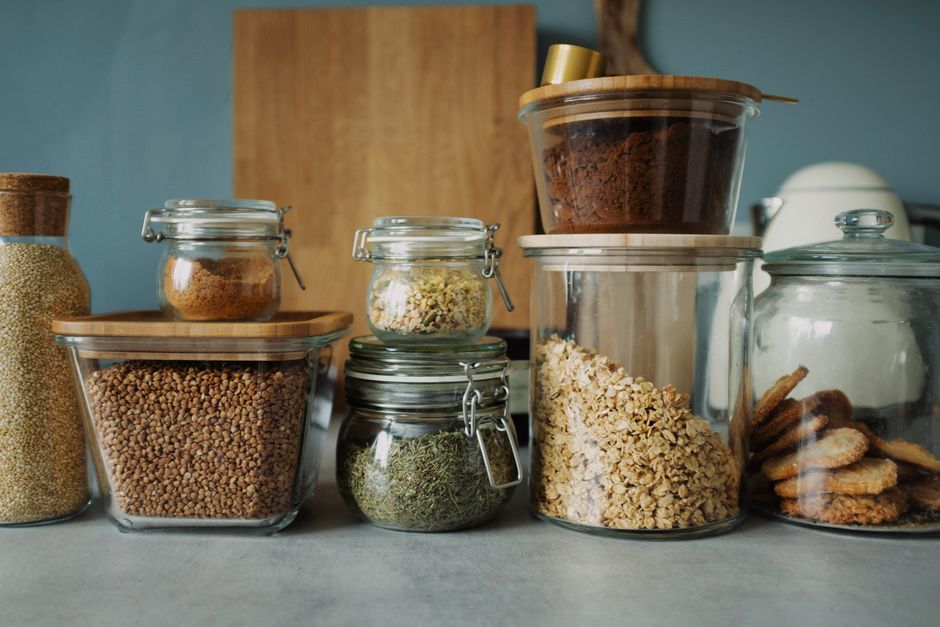
A clean, completely dry jar can make a split bag of rice easier to manage. Transfer the ingredient name, date, allergen information and cooking or storage instructions with it. Avoid topping up old contents with new ones: finish the older batch, then wash and thoroughly dry the container before refilling. Original packets with clips are perfectly useful storage too.
Bring Older Food to the Front
Within each group, place the food that needs using sooner at the front. Put newer duplicates behind it and turn labels so you can identify the contents without lifting every item. A row you can scan quickly is more useful than a tightly packed arrangement that needs dismantling.
Give open packets their own visible place, either at the front of the relevant group or in a small use-first tray. Choose a tray that fits only a handful of items. If it becomes an overflowing collection of everything in the cupboard, you will stop noticing it.
Close packets properly before returning them to the shelf. Use clips, suitable sealed containers or the packaging’s own closure, and avoid balancing a folded bag where it will spill the next time someone reaches past. Keep ingredients away from heat and moisture according to their labels.
Explain the arrangement to anyone sharing the kitchen. A simple agreement to take from the front and restock at the back makes the system easier to maintain. Leave a little empty space if possible, so putting shopping away does not immediately undo the tidy. You should be able to remove one tin without starting a small avalanche.
Plan Meals Around Half-Used Packets
Choose three sound ingredients from the use-first area and give each a specific job. A vague promise to use more lentils is easy to forget; putting lentil soup on Thursday’s dinner plan gives them a destination. Start with meals you already know how to make, especially on busy evenings.
Turn the cupboard into a short menu
Half a packet of couscous can become lunch with chickpeas, grated carrot and a lemon dressing. Follow the packet’s preparation instructions and add the fresh ingredients to your shopping list only if you need them. A small amount of dried fruit or chopped nuts can finish the bowl if those are already open too.
A tin of tomatoes and the end of a pasta packet suggest another easy meal. Soften an onion, add the tomatoes and season with herbs you have. Cook the pasta according to its instructions. If you are combining different pasta shapes, keep their cooking times in mind rather than assuming they will all be ready together.
For a cold March evening, red lentils, carrots and stock make a useful starting point for soup. Keep portions matched to what your household will eat or store appropriately. Reducing waste works best when the finished meal has a plan too, rather than becoming the next forgotten item in the fridge.
Keep a Simple Check Before Shopping
Before writing your next list, spend a few minutes looking at the use-first area, then scan the other groups for duplicates. Check the fridge and freezer as well, so your cupboard ingredients can join up with vegetables or portions you already have. Write quantities where that helps: one tin is clearer than simply beans.
Keep a short running list for staples as they run low. There is no need to count every grain of rice; you just want to recognise when there is enough for another meal. A quick cupboard photograph can also help if you tend to forget what is there while shopping.
When you return, put new items behind older ones and deal with split packaging straight away. Give the use-first tray another glance when making your meal plan. These tiny habits keep the larger tidy from becoming a job you have to repeat every weekend.
Stop once the cupboard is clean, readable and easy to use. The best result is the ordinary moment when you open the door, spot what you need and cook dinner with food that might otherwise have been overlooked.