
How to Wash Sunscreen Off Your Face After a Summer Day
By the end of an August day, your face may be wearing several applications of sunscreen, a little makeup and the evidence of a warm journey home. Removing that mixture does not have to mean a crowded bathroom shelf or a long scrubbing session. A familiar cleanser, careful coverage and a sensible stopping point can make the evening wash much more comfortable.
Consider What You Wore Alongside Sunscreen
Think back over the day before deciding how to cleanse. Did you apply a light sunscreen once before a quiet morning indoors, or reapply a water-resistant formula during a beach afternoon? Have you also worn foundation, concealer or long-wearing eye makeup? Those details are more useful than following the same elaborate routine every night.
The feel of a sunscreen does not tell you everything about how easily it washes away. A fluid can still form a persistent film, while a richer cream may remove readily with your usual product. Look at the product’s removal instructions if they are available, and use your experience of that particular combination.
Keep eye makeup separate in your thinking. A mascara that needs its own suitable remover does not necessarily mean your whole face needs an extra wash. Equally, a tinted product around the hairline may deserve a little more attention even when the rest of your face looks clear.
Pull your hair back and wash your hands before starting. Put out a clean towel now, so you will not be searching for one with wet hands. These small preparations often make more difference to the experience than adding another bottle.
Start with a Cleanser You Already Tolerate
Give your regular cleanser a fair chance before buying a dedicated evening collection. The useful question is whether it removes the products you wear while leaving your skin comfortable. Foam level, fragrance and a dramatic colour change are not reliable measures of how thoroughly you have cleansed.
Follow the directions for the cleanser’s amount and starting conditions. Some oils and balms are designed for dry hands and a dry face; many gels and creams are applied to damp skin. Starting in the wrong way can make a product harder to spread or rinse, which may tempt you to use more than you need.
Let the texture guide your movements
Spread a balm or oil gently, then add water to emulsify it if instructed. With a gel or cream, use enough slip that your fingers move easily rather than dragging. Work in light, small movements. There is no need to chase a fixed massage time if the product directions do not call for one.
If a cleanser starts to sting, rinse it away rather than persevering. A familiar product can still feel unpleasant on a day when your skin is already uncomfortable. Extra pressure or a longer massage will not make that experience more useful.

Work Gently Around the Hairline and Jaw
The centre of your face is easy to reach, so the edges can receive less attention. Spread cleanser towards the hairline, along the sides of the nose and around the jaw using your fingertips. Keep the pressure light, and avoid using your nails to lift anything that feels stuck.
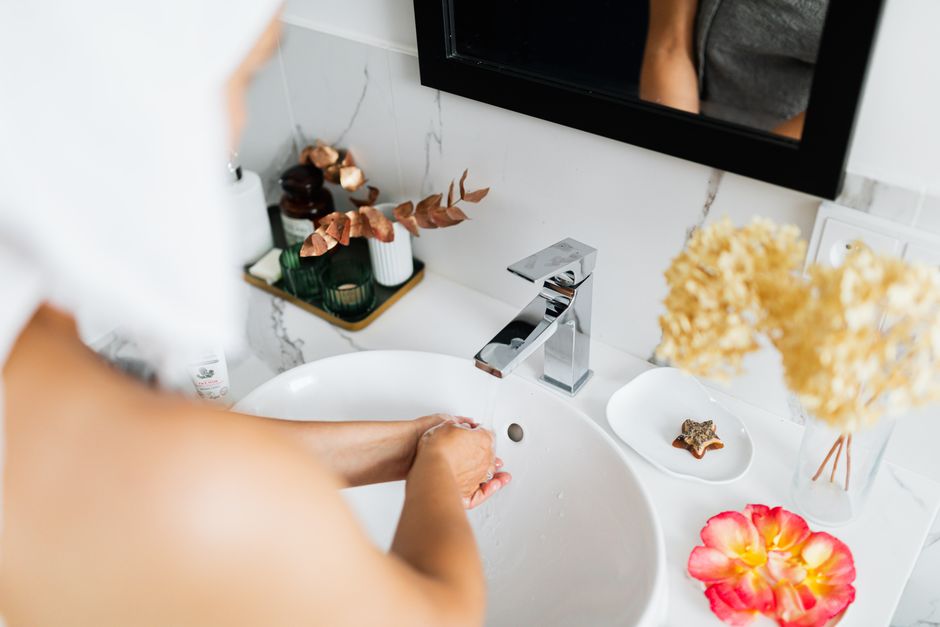
If you applied sunscreen to your ears and neck, include those areas in your evening wash. Move carefully around earrings and keep product out of the ear canal. Washing at a basin can leave these places awkward to rinse, so use small amounts of water or a soft, thoroughly rinsed cloth where needed.
For the eye area, follow the cleanser’s suitability instructions. A product intended for the face is not automatically suitable for removing eye makeup. Keep your eyes closed when using a suitable remover and avoid working it right into the lashes with repeated circular rubbing.
Think of this as checking your coverage, not increasing the intensity. One careful pass around the perimeter may be all that was missing from your usual wash. Moving slower at the hairline is preferable to scrubbing your cheeks again because they are easiest to reach.
Decide Whether a Second Cleanse Is Needed
Rinse the first cleanser away before judging the result. Leftover cleanser can itself feel slippery, particularly around the sides of the face. Give it a thorough, gentle rinse instead of assuming that every remaining sensation must be sunscreen.
A second cleanse may be useful after a persistent water-resistant sunscreen, a full face of makeup or a first product designed to be followed by another cleanser. It is not an automatic requirement whenever you have worn SPF. If your familiar cleanser removes the day’s products comfortably, you can stop there.
- Look for visible tinted residue along the jaw or near the hairline.
- Notice an obvious product film, while allowing for your skin’s natural softness.
- Use a small, gentle second cleanse only when there is a reason for it.
- Avoid repeatedly washing until your skin feels tight or squeaky.
You cannot prove that every invisible trace has gone by touching your face. Over time, settle on a combination that works reliably for your sunscreen and makeup, then keep the routine consistent. A clean towel does not need to become a rubbing test, and an exfoliating brush is not required to finish the job.
Rinse and Dry Without Rubbing
Use lukewarm water and keep the stream or splashes gentle. Very hot water adds discomfort without being necessary for this step. Cup water in your hands and rinse in manageable passes, including under the chin and beside the ears where cleanser can collect.
If you prefer a washcloth, choose a soft, clean one, wet it thoroughly and use it lightly. Rinse the cloth as you go so that you are not moving the same cleanser and makeup around your face. A cloth is an option for removal, not an invitation to polish the skin.
Pat with a clean towel rather than dragging it from forehead to chin. You only need to remove excess water. Pay attention to the hairline if it is still damp with cleanser, and rinse again if necessary instead of rubbing harder with the towel.
Keep the towel somewhere it can dry between uses, and replace a damp or visibly dirty one. If you tend to postpone washing because it soaks your sleeves, roll them up and lean closer to the basin. Making the task less messy can help it become an easy part of your evening.
Simplify the Rest of Your Evening Routine
Once your face is clean, apply a moisturiser you already find comfortable, following its directions. You do not need to compensate for a day of sunscreen with an acid toner, scrub or several new treatments. If your skin feels unsettled after heat and washing, keep the remaining steps especially simple.
Notice how your face feels later, rather than judging only the first moment after drying. Recurring tightness after cleansing is a useful reason to reconsider your water temperature, pressure or number of washes. Change one part of the routine at a time so you can tell what makes it more comfortable.
For a late night, leave your cleanser and clean towel ready before going out. The easier the routine is to begin, the less tempting a hurried scrub becomes. Finish when the day’s products are removed and your skin feels comfortable, then let the rest of the evening belong to something else.