How to Layer Outfits for Transitional Seasons Stylishly and Comfortably
If you’re wondering how to layer outfits for transitional seasons, you’re not alone. Those in-between months—spring and fall—can throw unpredictable weather your way, making dressing a daily challenge. But here’s the good news: mastering layering isn’t just about staying comfortable; it’s a stylish game-changer that lets you adapt effortlessly from chilly mornings to warmer afternoons. In this post, you’ll discover straightforward layering principles, must-have pieces, and fresh outfit ideas that keep your wardrobe versatile, practical, and always on point. Ready to transform your transitional season style? Let’s dive in!
Why Layering is Essential for Transitional Weather
Transitional weather can be tricky—mornings may start chilly, afternoons warm up, and evenings bring a cool breeze. This is why layering outfits for transitional seasons is a game changer. It lets you easily adjust your look and comfort throughout the day without overheating or feeling underdressed.
Beyond just comfort, layering offers practical benefits. Breathable fabrics in your base layers help with moisture management, keeping sweat at bay. Mid layers provide warmth without bulk, while outer layers protect against wind, light rain, or sudden chills. This functional approach means you’re ready for whatever the weather throws at you.
But layering isn’t just about function—it’s a style advantage too. Adding layers introduces dimension and texture, making your transitional weather outfits more interesting and polished. Mixing lightweight jackets, cardigans, and scarves can elevate a simple look with visual depth and creativity.
In short, mastering layering means staying comfortable, protected, and stylish all at once during the unpredictable seasonal shifts.
Core Principles of Effective Layering
When dressing for transitional weather outfits, the key is to start thin and build up. Begin with a breathable base layer like lightweight cotton or linen blends that wick moisture and keep you comfortable. Next, add an insulating mid layer such as a cardigan, lightweight sweater, or shacket to trap warmth without bulk. Finally, top off with a protective outer layer like a denim jacket, trench coat, or utility jacket to shield against wind or light rain.
Fit and proportions matter—a fitted base layer ensures comfort and prevents bulk, while looser mid and outer layers allow freedom of movement and easy removal. Mixing textures and fabrics adds stylish dimension and interest to your outfit. Think pairing soft knits with crisp cotton or lightly distressed denim.
Lastly, prioritize removable layers for all-day adaptability, so you can adjust your look as temperatures shift. This approach makes layering natural, functional, and stylish whether you’re transitioning between spring and summer or summer to fall.
Essential Wardrobe Pieces for Transitional Layering
When dressing for transitional weather outfits, having the right wardrobe staples makes layering easy and stylish. Start with base layers like lightweight tees, tanks, long-sleeve tops, and turtlenecks made from breathable fabrics such as cotton or merino wool. These keep you comfortable while managing moisture and warmth.
For mid layers, choose versatile pieces like cardigans, lightweight sweaters, shackets, vests, and blazers. These add insulation without bulk and create great texture mixing outfits that add depth to your look.
Your outer layers should provide protection from wind and light rain. Denim and leather jackets, trench coats, and utility jackets are perfect lightweight jackets for this purpose. Adding lightweight scarves here not only boosts warmth but also helps with stylish scarf layering to complete your outfit.
Don’t forget your bottoms and dresses. Jeans, midi and maxi skirts, and dresses that work with leggings or tights make great options to transition from summer to fall or from winter to spring. Layering over these pieces keeps your look fresh and adaptable.
Finally, accessories like scarves, belts, and hats play a key role in adding both polish and warmth. Belts can cinch layers for better proportions, while hats and scarves provide extra comfort when temperatures dip.
Best Fabrics and Materials for Transitional Seasons
When dressing for transitional weather outfits, choosing the right fabrics makes all the difference. Breathable and moisture-wicking materials like cotton, linen blends, and merino wool keep you comfortable as temperatures shift throughout the day. These fabrics help regulate body heat, so you don’t overheat or feel clammy.
For lightweight insulation, thin knits and fleece-lined items provide just enough warmth without bulk. Think lightweight sweaters or cardigans that add cozy layers without turning your outfit heavy.
Weather-resistant materials are crucial too. Water-repellent trench coats and windproof jackets protect you from unexpected spring showers or fall breezes, helping you stay dry and comfortable without sacrificing style. Avoid heavy winter fabrics like thick wools or bulky coats—they’re too warm and limit your layering options.
Stick to versatile neutrals in these fabrics as they mix and match easily, giving you more outfit combinations throughout the season.
Step-by-Step Layering Techniques
Mastering the classic three-layer system is key to dressing for transitional weather outfits. Start with a breathable base layer like a lightweight tee or tank that manages moisture. Add a mid layer such as a cardigan or lightweight sweater to provide insulation. Finish with a protective outer layer, like a denim jacket, trench, or shacket, that shields you from wind or light rain.
When layering, keep proportions in mind: wear longer outer layers over shorter ones to create a balanced silhouette. Strategic tucking—like partially tucking your base layer into your jeans or skirts—can avoid bulk and add structure.
Color-wise, use neutrals as your base to keep things versatile. Then, bring in pops of color or earthy fall tones like burnt orange, olive, or mustard to add warmth in autumn. For spring, think about soft pastels mixed with classic neutrals for a fresh look. Mixing colors this way keeps your outfits vibrant without feeling overwhelming.
For practical inspiration and style ideas, explore this detailed guide on cute clothes for fall layering to refine your transitional season outfit game.
Outfit Ideas for Transitional Seasons
Layering outfits during transitional weather can be both practical and stylish. Here are some easy-to-copy formulas that work well for spring and fall transitions:
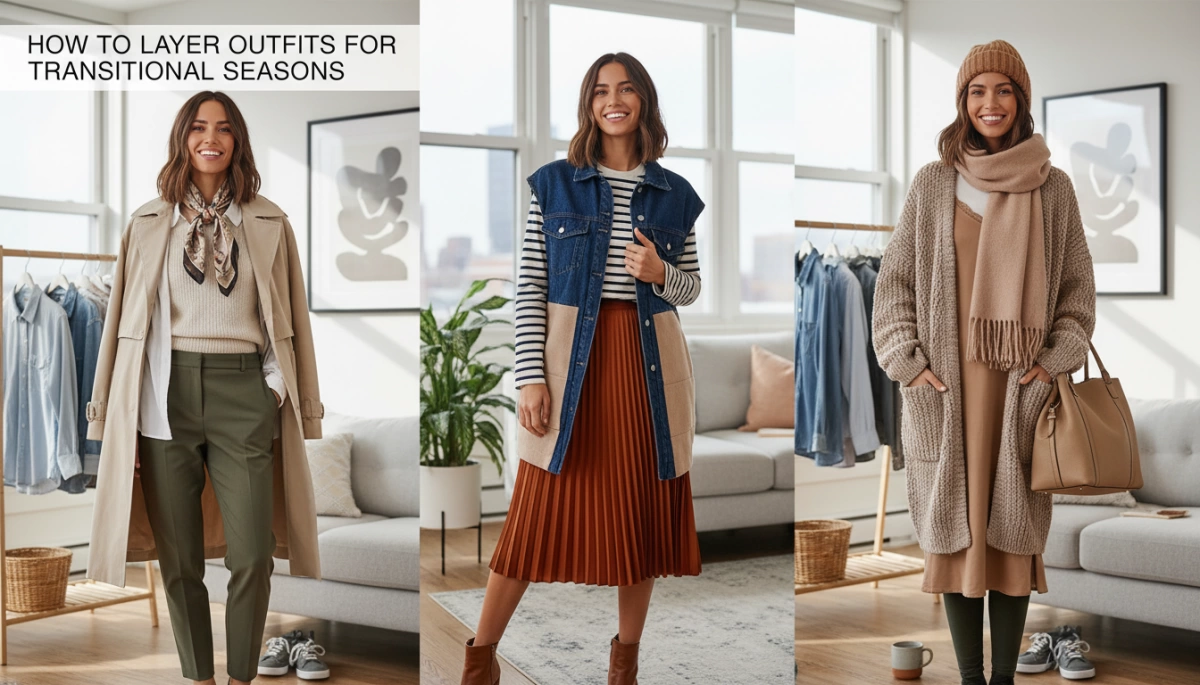
- Casual: Start with a breathable tee, add a cozy cardigan, and top it with a denim jacket paired with your favorite jeans. This combo balances warmth and comfort perfectly for cool mornings and warmer afternoons.
- Office: Swap the tee for a crisp button-up shirt, then layer a tailored blazer and a lightweight trench coat over trousers. This polished look keeps you warm while staying professional in unpredictable temperatures.
- Weekend Chic: Combine a flowy summer dress with a snug sweater layered on top and finish with ankle boots. This outfit is ideal for those in-between days when you want to keep a bit of summer alive but need extra warmth.
- Elevated: Try pairing a fitted turtleneck with an oversized shirt and a lightweight coat for a refined yet relaxed vibe. This blend of fitted and loose pieces adds interest and keeps you comfortable as the temperature shifts.
For an effortlessly stylish touch, consider monochrome layering — wearing layers in the same color family adds sophistication and elongates your silhouette. Also, mix different textures like knitwear, denim, and leather to add depth and dimension to your outfits.
Here are some more outfit ideas incorporating popular transitional season pieces:
- Lightweight long-sleeve tee + utility jacket + midi skirt + ankle boots
- Linen blend tank + cardigan + cropped trousers + loafers
- Striped shirt + shacket + jeans + sneakers
- Turtleneck + vest + wide-leg pants + crossbody bag
- Blouse + blazer + wide belt + tapered jeans + loafers
- Midi dress + denim jacket + scarf + ankle boots
- Lightweight sweater + trench coat + pleated skirt + flats
- Basic tee + oversized blazer + leather pants + boots
- Button-up + knit vest + utility jacket + chinos
- Long sleeve top + zip-up fleece + midi skirt + sporty sneakers
You can adjust these combinations by swapping colors and fabrics to suit spring’s pastels and fresh tones or fall’s earthy, neutral palette. For example, spring layering often uses lighter fabrics and brighter hues, while fall focuses on deeper colors and richer textures.
Footwear and Accessories to Complete the Look
When it comes to finishing your transitional weather outfits, the right footwear and accessories make all the difference. Ankle boots are a go-to choice—they’re stylish, practical, and perfect for both spring and fall layering. Alongside boots, versatile loafers and sneakers work well for casual looks, offering comfort without sacrificing style.
Accessories are key for adding a polished touch and extra warmth. Lightweight scarves are perfect for layering—they add texture and a splash of color without feeling bulky. Don’t hesitate to use belts to cinch layers and define your silhouette, especially when wearing oversized cardigans or jackets. And for practicality combined with style, a good crossbody bag keeps essentials handy while complementing your overall outfit.
For more tips on selecting the perfect shoes to match your transitional outfits, explore this guide to women’s favorite shoes, including ankle boots and loafers, to refine your seasonal wardrobe seamlessly.
Common Layering Mistakes to Avoid
When putting together transitional weather outfits, it’s easy to go wrong if you’re not careful. Here are the most common layering mistakes to avoid:
- Over-bulking with too many thick layers: Adding several heavy pieces can make your outfit uncomfortable and restrict movement. Instead, aim for lightweight layers that you can remove or add as temperatures change during the day.
- Ignoring breathability: Wearing fabrics that don’t breathe well leads to sweating and discomfort. Choose breathable fabrics like cotton, linen blends, or merino wool to keep moisture in check while layering.
- Mismatched proportions: Too many oversized or too many tight layers can throw off your look. Stick to the core layering principle: fitted base layers, with slightly looser mid and outer layers to maintain balance and avoid bulkiness.
- Clashing colors or textures: Pairing colors that don’t harmonize or fabrics that conflict can make your outfit feel chaotic. Use a neutral color palette as your base and add pops of color or texture carefully to keep your outfit polished and cohesive.
Avoiding these pitfalls will help you stay comfortable and stylish throughout the spring and fall transitions.